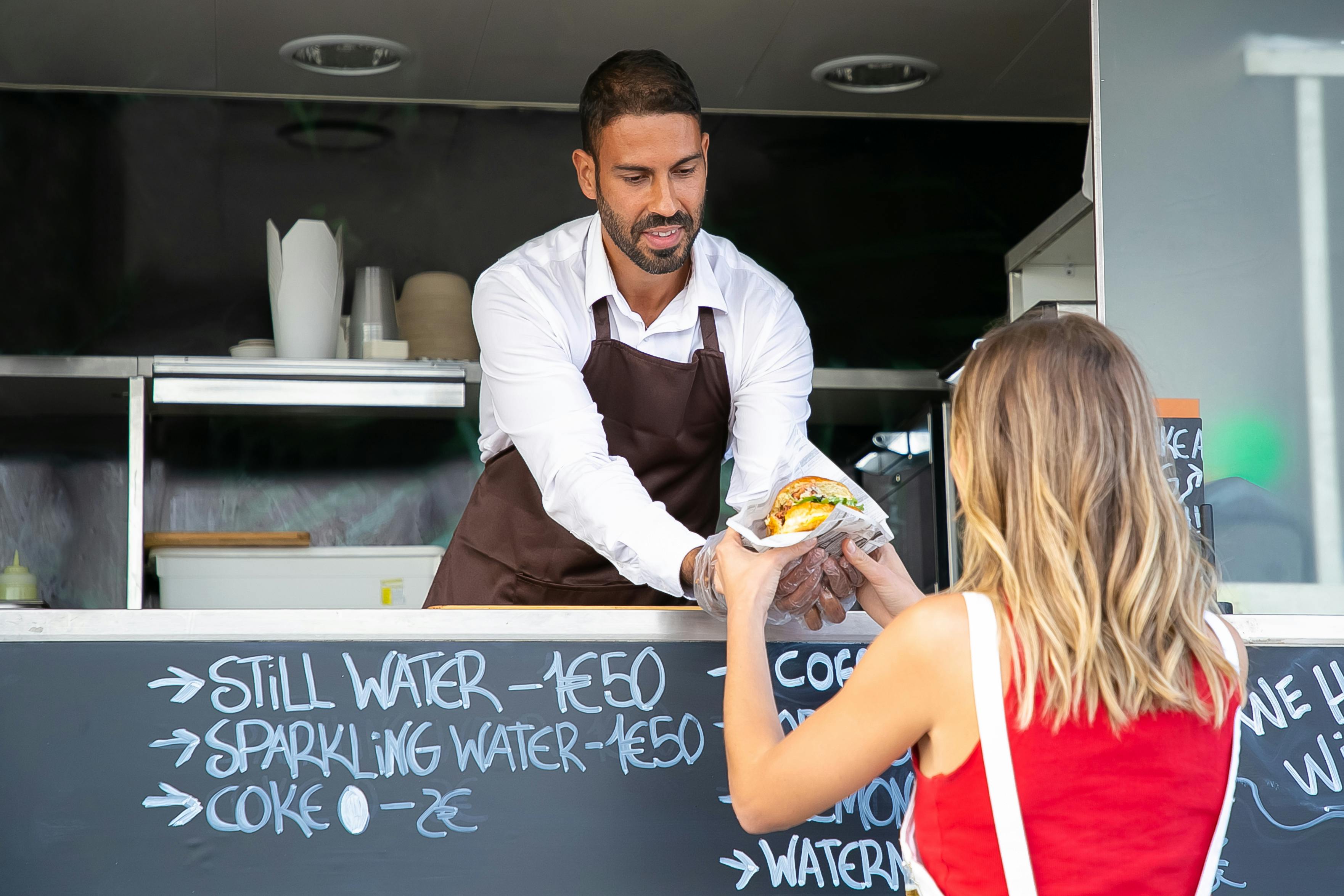
Let me tell you about a food truck owner I worked with last month. Amazing tacos. Lines around the block. Yet somehow, he was barely breaking even. When I looked at his pricing, I found the problem immediately: he was using the 3x markup rule he learned at a restaurant trade show.
That "expert advice" was costing him over $3,000 per month in lost profit. Here's why.
The Two Pricing Myths Destroying Restaurants
"Just multiply your food cost by 3"
You've heard this everywhere. TV shows. Trade conferences. Online forums. Take your ingredient cost, multiply by 3, boom, that's your price. A $5 plate of food should sell for $15. Simple, right?
Wrong. This one-size-fits-all approach ignores your actual costs, your market, your labor, and whether you'll even be able to sell that item at that price.
"Every restaurant should run a 34% food cost"
The National Restaurant Association published data showing average food costs around 32-34% for full-service restaurants. So naturally, "experts" started preaching this from stages everywhere: "Your food cost should be 34%!"
Also wrong. That's an average across thousands of wildly different restaurants. Your seafood restaurant can't run the same food cost as a pizza joint. Your high-labor concept can't use the same numbers as a quick-service operation.
✅ Fact Check: Is the 34% Food Cost Real?
Yes and no. The National Restaurant Association's 2025 Restaurant Operations Data Abstract (based on data from 900+ restaurant operators) shows:
- • Full-service restaurants: Median food cost of 32.0% in 2024
- • Limited-service restaurants: Median food cost of 32.4% in 2024
- • High-volume restaurants ($2M+ sales): Median food cost of 31.0%
- • Lower-volume restaurants (<$2M sales): Median food cost of 33.7%
The key word is "median." Half of restaurants are above this number, half are below. It's descriptive data, not prescriptive advice. The NRA explicitly states: "The data is not intended to represent standards or goals for individual restaurants."
The Two Fatal Problems with Cookie-Cutter Pricing
Problem #1: Your Restaurant Isn't Average
Let me ask you this: Are you on the same street corner as your competition? Do you have the same price point? Same style of service? Same quality of product? Same labor costs? Same core values? Same customer base?
Of course not.
So why would you use the same pricing formula?
A pizzeria and a seafood restaurant cannot possibly both shoot for a 34% food cost. Their ingredient costs, prep time, waste percentages, and perceived value are completely different.
Problem #2: Some Items Would Never Sell
If you priced everything at a 34% food cost using the 3x markup, you'd end up with menu items that are either:
- → Too expensive to sell: Your high-ingredient-cost items would be priced out of the market. Nobody's paying $45 for your lobster roll just because the ingredients cost $15.
- → Underpriced cash cows: Your low-cost, high-value items (like fries or drinks) would be criminally underpriced, leaving massive profits on the table.
And here's the kicker: If your labor costs are sky-high (which they probably are), you might need to run a 24% food cost just to make any money at all. The 3x markup completely ignores your labor reality.
"Food and labor costs are the two most significant line items for a restaurant, each accounting for approximately 33 cents of every dollar in sales. This leaves a pre-tax profit margin of roughly 5% for a typical restaurant."
The Real Math: Why Prime Cost Matters More
Instead of obsessing over a magic food cost percentage, successful restaurant operators focus on Prime Cost the single most important metric in your business.
For restaurants doing $850K+ annually
You're probably losing money
Key insight: You might run a 38% food cost and a 17% labor cost, or a 28% food cost and a 27% labor cost both hit 55% prime cost, but the path is different based on your concept.
The 5 Steps to Price Your Menu Properly
Stop guessing. Start profiting. Here's the actual system successful restaurants use.
Start with a Budget (Know Your Prime Cost Target)
You can't price properly if you don't know your actual costs. How will you know where your food cost should be if you don't have a budget?
Your prime cost target needs to be based on YOUR restaurant:
- • Quick service? You might run 35% food cost / 20% labor = 55% prime cost
- • Full service? You might run 32% food cost / 28% labor = 60% prime cost (tight!)
- • Fine dining? You might run 38% food cost / 35% labor = 73% prime cost (need high prices!)
Without a budget, you're flying blind. You don't know if you need to target a 24% food cost or a 34% food cost. And that difference is your entire profit margin.
Use Accurate, Up-to-Date Recipe Costing Cards
"But those are too hard!" Yeah, and running a restaurant is the toughest business there is. You MUST know what each dish actually costs you.
The two most important systems any restaurant should have:
- Budgets
- Recipe costing cards
Guess which two systems most restaurants never have? 🤦♂️
A recipe costing card tracks every ingredient in a dish: the tomatoes, the cheese, the oil, the spices, the garnish everything. Then it calculates the per-portion cost based on current prices.
Pro tip: Update these quarterly or when ingredient prices change significantly. That $4.50 burger might actually cost you $5.80 now, and you'd never know without current costing cards.
Calculate Your Ideal Food Cost
Using your product mix (what customers actually buy) combined with your recipe costing cards, you can calculate your ideal food cost what your food cost should be if you ran a perfect restaurant.
What is "ideal food cost"?
It's your theoretical food cost if there was:
- ✓ Zero waste
- ✓ Zero theft
- ✓ Zero spoilage
- ✓ Perfect portion control
- ✓ 100% accurate inventory
(Spoiler: That perfect restaurant doesn't exist. But knowing your ideal cost tells you where the leaks are.)
If your actual food cost is 36% but your ideal is 28%, you have an 8% leak. That's either theft, waste, over-portioning, or comp meals. Time to investigate.
Decide Where You're Pricing in the Marketplace
Now comes the strategic part. You have three options:
Undercut everyone on price. Not recommended unless you're willing to compete on volume with razor-thin margins.
Price similarly to comparable restaurants in your area. Safe, but you better have competitive costs.
Offer superior service, quality, and experience then charge accordingly. This is how you build a sustainable business.
Remember: You're not just selling food. You're selling an experience, convenience, ambiance, service, and consistency. Price accordingly.
Engineer Your Menu Strategically
This is where the magic happens. Sort your sales data from most-sold to least-sold items. Then make strategic decisions:
- ✓ Raise prices on your top 1-3 sellers (they'll still sell)
- ✓ Add high-margin items
- ✓ Promote profitable items
- ✓ Reduce portion sizes slightly
- ✓ Negotiate better supplier pricing
- ✗ Drop unprofitable items that don't sell
- ✗ Cut items with excessive prep time
- ✗ Remove items with high waste
- ✗ Eliminate menu complexity
- ✗ Stop carrying slow-moving inventory
🎯 The Goal:
Scientifically re-engineer your menu to guide customer choices toward your most profitable items while hitting your target food cost percentage. This is menu engineering, and it's how the pros do it.
Real Example: Austin Taco Truck
Remember that food truck owner I mentioned at the start? Here's what we did:
- Average food cost: 33% (seemed fine)
- Prime cost: 68% (disaster)
- Net profit: -2% (losing money)
- Problem: High labor + one-size-fits-all pricing
- Average food cost: 27% (engineered down)
- Prime cost: 54% (healthy)
- Net profit: 8% (crushing it)
- Result: $3,200 more per month
What Changed:
- Raised prices on his 3 best sellers by $1 each (no drop in sales)
- Dropped 4 low-margin items that rarely sold
- Added 2 high-margin sides (drinks and chips)
- Slightly reduced portion sizes on loss leaders
- Started buying smarter (locked in better prices on bulk items)
Calculate Your Menu Prices Now
Stop guessing. Use our free menu pricing calculator to get science-backed prices based on prime cost, food cost percentage, and your actual restaurant data.
Open Free Calculator →No signup required • Instant results • Based on NRA 2026 data
The Tools You Actually Need
Recipe Costing Software
Tools like MarginEdge, Toast, or even a well-built spreadsheet. Track every ingredient cost and update regularly.
Investment: $0-200/month
Modern POS System
Track sales data, product mix, and real-time inventory. This is your most important piece of equipment.
Investment: $50-300/month
Direct Ordering Platform
Own your customer relationships. Collect data. Build loyalty. Stop paying 30% to third parties.
Investment: $1-3 per order
Your Brain + Spreadsheets
Seriously. Budget template, menu profitability tracker, and weekly cost analysis. Free and powerful.
Investment: Your time
The Bottom Line
The 3x markup rule and the 34% food cost myth aren't just oversimplified they're actively harmful. They ignore your actual costs, your market positioning, your labor reality, and your unique business model.
Restaurants that thrive don't follow cookie-cutter formulas. They:
- → Build budgets based on their actual costs
- → Know exactly what each dish costs
- → Target prime cost, not just food cost
- → Price strategically based on market positioning
- → Engineer their menus to guide customer behavior
It's not sexy. It's not simple. But it's how you actually make money in this business.
📚 Sources & Further Reading
Stop Leaving Money on the Table
You're working too hard to give away 30% of your revenue to DoorDash. Get your own ordering platform, own your customers, and keep your profits.
No credit card • Setup in 15 minutes • Cancel anytime